 en
en  English
 中文简体
中文简体Content
- 1 What Makes PVB "Photovoltaic Grade" — and Why It Differs from Standard PVB
- 2 Photovoltaic Grade PVB vs. EVA vs. POE: A Performance Comparison
- 3 Key Technical Specifications for Photovoltaic Grade PVB Film
- 4 Applications Where Photovoltaic Grade PVB Has a Clear Advantage
- 5 Quality Certification and Testing Standards to Verify
- 6 Supplier Evaluation Criteria for Photovoltaic Grade PVB
Polyvinyl butyral (PVB) has been a foundational encapsulant material in the solar industry for decades, yet the specific requirements of photovoltaic grade PVB are frequently misunderstood — even by procurement teams with experience sourcing standard architectural PVB film. The performance demands placed on encapsulant materials inside a solar module are substantially more stringent than those for laminated safety glass, and choosing the wrong grade or supplier directly affects module efficiency, warranty claims, and long-term energy yield. This guide explains what distinguishes photovoltaic grade PVB, how it performs against competing encapsulants, and what technical parameters matter most when evaluating suppliers.
What Makes PVB "Photovoltaic Grade" — and Why It Differs from Standard PVB
Standard architectural PVB film — the interlayer used in laminated windshields and building glass — is engineered for mechanical performance: impact resistance, adhesion to glass, and sound attenuation. Photovoltaic grade PVB shares the same base polymer chemistry but is formulated and processed to meet an entirely different set of performance requirements driven by the operating environment inside a solar module.
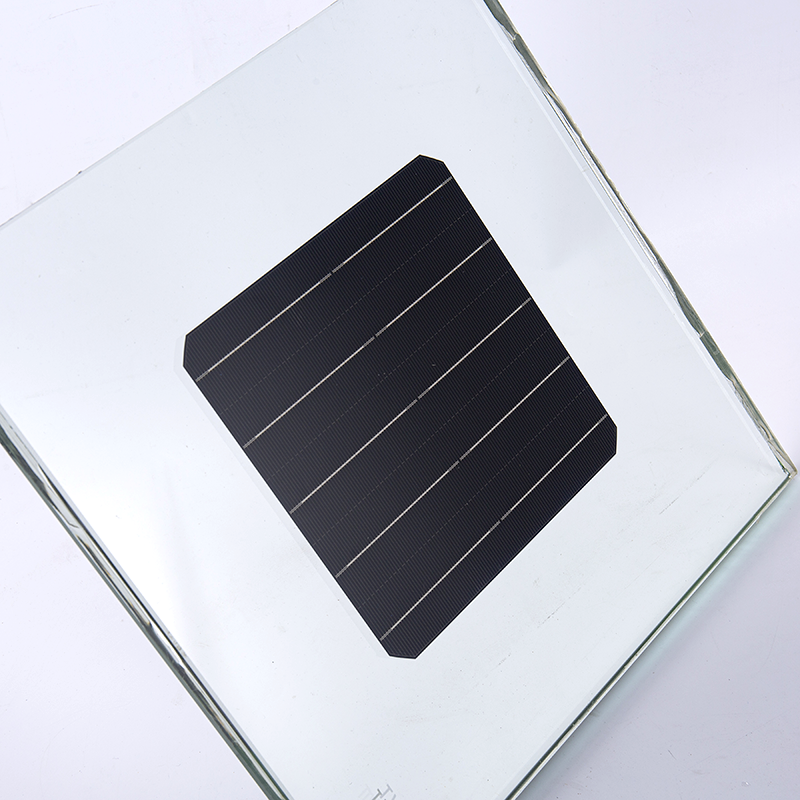
The most fundamental difference is optical transmission. A solar module encapsulant must transmit the maximum possible fraction of incident light to the cell surface, particularly in the 350–1200nm wavelength range where silicon cells convert light to electricity. Standard architectural PVB is optimized for clarity to the human eye, which covers a narrower visible spectrum; photovoltaic grade PVB is specifically formulated to minimize absorption and scattering across the full solar-relevant spectrum, with high-quality grades achieving transmittance above 91% in the critical range.
Moisture resistance is a second critical differentiator. PVB is inherently hygroscopic — it absorbs water from the atmosphere — and in standard glazing applications this is managed through edge sealing. Inside a solar module expected to operate outdoors for 25–30 years, moisture ingress through the encapsulant causes cell corrosion, delamination, and electrical degradation. Photovoltaic grade PVB is formulated with moisture barrier additives and surface treatments that significantly reduce water vapor transmission rate (WVTR) compared to architectural grades, though it remains higher than EVA (ethylene-vinyl acetate) in absolute terms.
Electrical insulation performance is the third major area of divergence. The encapsulant in a solar module is the primary dielectric layer between the current-carrying cell circuit and the module frame or mounting structure. Volume resistivity requirements for photovoltaic grade PVB are substantially higher than for architectural film, typically exceeding 10¹³ Ω·cm, and must be maintained over the operational temperature range and after accelerated aging tests.
Photovoltaic Grade PVB vs. EVA vs. POE: A Performance Comparison
Photovoltaic grade PVB competes primarily with EVA and polyolefin elastomer (POE) encapsulants in the solar module market. Each material has distinct strengths and weaknesses that make it more or less suitable for specific module types and operating environments.
| Property | PV Grade PVB | Standard EVA | POE |
|---|---|---|---|
| Light Transmittance | ≥91% | 90–92% | 91–93% |
| Moisture Resistance | Moderate | Moderate | Excellent |
| PID Resistance | Excellent | Poor–Moderate | Good |
| Yellowing Resistance | Good | Moderate (acetic acid risk) | Excellent |
| Lamination Process | Standard (no crosslinking) | Requires crosslinking cure | Requires crosslinking cure |
| Relative Material Cost | Moderate–High | Low | High |
The most significant practical advantage of photovoltaic grade PVB over EVA is its resistance to potential-induced degradation (PID) — a failure mode in which high voltage between cells and the module frame drives ion migration through the encapsulant, causing severe and rapid power loss. EVA's relatively high ionic conductivity makes it susceptible to PID in high-voltage system configurations; PVB's higher volume resistivity and lower ion mobility make it substantially more resistant. For utility-scale projects with 1500V system voltages or installations in humid climates, this distinction directly affects long-term energy yield and bankability.
A second important advantage of PVB is its lamination process. EVA and POE require a thermal crosslinking cure cycle during lamination — typically 12–20 minutes at 145–155°C — which constrains throughput on the module production line. PVB bonds to glass and backsheet through physical adhesion without crosslinking, allowing faster lamination cycles and eliminating the risk of incomplete cure, which is a known quality issue with EVA in high-throughput manufacturing environments.
Key Technical Specifications for Photovoltaic Grade PVB Film
When evaluating photovoltaic grade PVB suppliers or comparing product datasheets, the following parameters carry the most weight in determining whether a film will meet module performance and durability requirements.
Optical Properties
Solar-weighted transmittance should be stated for the 350–1200nm range and measured according to a defined standard (IEC 61646 or equivalent). Haze value — a measure of light scattering — should be below 1% for front-side encapsulant applications; elevated haze reduces the effective irradiance reaching the cell surface and lowers module output. UV cut-off wavelength and UV stabilizer loading determine how well the film resists photodegradation and yellowing over the module's operational life — typically specified as maintaining transmittance above 88% after 1000 hours of UV exposure per IEC 61215.
Electrical Properties
Volume resistivity at operating temperature (typically tested at 85°C and 85% relative humidity after conditioning) is the primary electrical specification. Values below 10¹² Ω·cm at elevated temperature and humidity indicate elevated PID risk and should be disqualifying for high-voltage applications. Dielectric strength — the voltage the film can withstand per unit thickness before breakdown — should meet IEC 60664 requirements for the system voltage class of the intended module design.
Mechanical and Adhesion Properties
Peel strength to glass and to the backsheet material (measured by 90° or 180° peel test after lamination and after damp heat aging) confirms that adhesion is maintained over time. A minimum peel strength of 40 N/cm to glass after 1000 hours of damp heat (85°C/85%RH) is a commonly used threshold. Elongation at break and tensile strength determine how well the encapsulant accommodates thermomechanical stress during temperature cycling — relevant to cell cracking risk in modules using thin or large-format cells.
Applications Where Photovoltaic Grade PVB Has a Clear Advantage
While EVA dominates overall solar encapsulant volume due to its lower cost, photovoltaic grade PVB holds a genuine performance advantage in several specific application categories.
- Building-integrated photovoltaics (BIPV): Modules used as architectural glass elements — facades, skylights, canopies, and balustrades — must meet both structural glazing standards and electrical performance requirements. PVB is the established interlayer material for structural laminated glass, and photovoltaic grade PVB allows BIPV manufacturers to use familiar lamination processes and glass certification pathways while meeting solar module performance requirements simultaneously.
- High-voltage utility-scale systems: Projects operating at 1000V or 1500V DC system voltages face elevated PID risk, particularly in humid climates. The superior volume resistivity of photovoltaic grade PVB directly addresses this risk without requiring additional anti-PID coatings or system-level mitigation measures.
- Glass-glass module construction: Double-glass modules — increasingly popular for their durability and bifacial capability — require an encapsulant that bonds reliably to glass on both sides. PVB's well-established adhesion to glass and its compatibility with standard laminated glass production equipment make it a natural fit for glass-glass constructions, particularly in the BIPV and premium module segments.
- Thin-film modules: Certain thin-film technologies — including CdTe and amorphous silicon — have historically used PVB encapsulants due to compatibility considerations with cell chemistry and the need for lamination processes that avoid the acetic acid outgassing associated with EVA crosslinking.
Quality Certification and Testing Standards to Verify
Supplier quality claims for photovoltaic grade PVB should be substantiated by third-party test data, not just product datasheets. The relevant certification and testing framework includes the following standards and programs.
IEC 61215 and IEC 61730 are the primary module qualification standards, and encapsulant materials used in certified modules must survive the damp heat, thermal cycling, UV exposure, and mechanical load sequences defined in these standards without delamination, excessive yellowing, or dielectric failure. Material suppliers who can provide test data from modules built with their film that have passed these sequences — rather than material-level tests alone — provide stronger evidence of field performance.
IEC 62716 covers ammonia resistance testing, relevant for agricultural PV installations where elevated atmospheric ammonia accelerates corrosion of encapsulant and cell surfaces. Not all photovoltaic grade PVB films are formulated for ammonia resistance, so projects targeting agrivoltaic or livestock environments should verify compliance explicitly.
PID resistance testing per IEC TS 62804 measures power loss under high-voltage stress conditions. Request test reports showing power loss below 5% after the standard test protocol for any photovoltaic grade PVB film under consideration for high-voltage system applications. Films without this data should not be assumed PID-resistant based on material resistivity values alone.
Supplier Evaluation Criteria for Photovoltaic Grade PVB
With several global and regional suppliers competing in the photovoltaic grade PVB market, differentiating between them requires looking beyond headline transmittance and resistivity numbers.
- Batch-to-batch consistency: Optical and electrical properties must be consistent across production lots. Request lot-level quality certificates (CoA) and, where possible, audit production quality control records for specification drift over time. Inconsistent film thickness — the most common manufacturing variability — directly affects lamination pressure uniformity and local optical performance.
- Technical support capability: Photovoltaic grade PVB lamination parameters — temperature profile, vacuum cycle, press pressure — differ from EVA and require supplier support during process qualification. Suppliers with dedicated application engineering teams and documented lamination process recommendations reduce the time and cost of production line qualification.
- Supply chain stability: PVB resin supply is concentrated among a small number of global producers. Evaluate whether your encapsulant supplier has secured long-term resin supply agreements or backward integration that protects against raw material shortages — a risk that materialized for multiple encapsulant suppliers during 2021–2022 supply chain disruptions.
- Compatibility documentation: Request compatibility test data for your specific cell type (monocrystalline PERC, TOPCon, HJT, or thin-film), backsheet material, and frame sealant. Incompatibilities between encapsulant and adjacent materials are a known but under-documented cause of field delamination and corrosion failures.
Photovoltaic grade PVB is not a commodity material — the performance gap between a well-formulated, consistently manufactured film and a lower-quality alternative becomes visible only after years of field operation, by which point warranty and reputational costs can significantly exceed the initial material cost saving. Thorough supplier qualification, grounded in standardized test data and production audits, is the most reliable way to manage this risk before it reaches the field.